By Bryan Holmes, former Air Force pilot and award-winning STEM teacher.
If your school district follows the Next Generation Science Standards (NGSS), what is the best way to teach a science course? The NGSS promotes what it calls “three dimensional” learning by providing three types of standards: a long list of content standards (“Disciplinary Core Ideas”), seven conceptual standards (“Crosscutting Concepts”), and a small set of skills-based standards (“Science and Engineering Practices”). What is a teacher supposed to do with all these standards?
My approach was simple: teach the skills, and the content and concepts will follow. In other words, put all the emphasis on the NGSS skills-based standards, the “Science and Engineering Practices,” to cover the content and conceptual standards. Do you teach math or some other STEM course? Follow the same process with your standards.
Here are five steps to teach an NGSS-based course in this way:
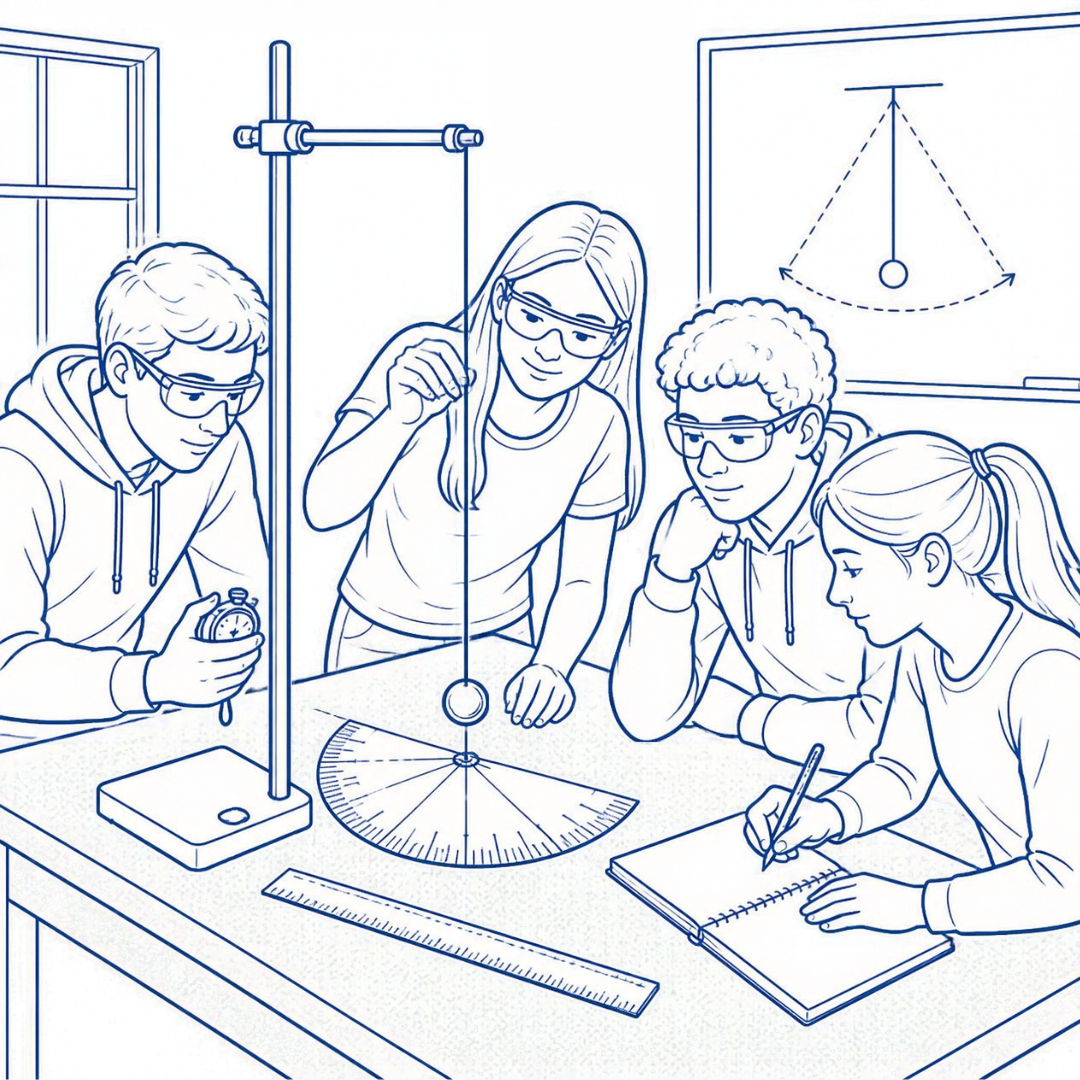
- Early in the school year, have students do a simple lab where they practice the science-based skills in the “Science and Engineering Practices.” Emphasize following a scientific process and accurately and precisely documenting their work. (Download a lab assignment example.)
- Give students a standard format for a lab report and grade each one against a standard rubric. (Download a lab report template and a lab report rubric example).
- Similarly, early in the school year, have students do a simple engineering design project where they practice the engineering-based skills in the “Science and Engineering Practices.” (Download an engineering design project assignment example).
- Give students a standard format for an engineering design project report and grade each one against a standard rubric. (Download an engineering design project report template and an engineering design process rubric example).
- After that, repeatedly have students do labs and engineering design projects using these processes, reports, and rubrics. Each lab and engineering design project gives students the opportunity to learn the conceptual and content standards in a different way.
Students will enjoy the variety of lessons they experience, and they will take pride in getting good at labs and engineering design projects. They also will remember the content and concepts better. You will be teaching your students to learn how to learn in the process.
Want a practical STEM teaching tip like this each month? Subscribe below. These tips come from my book, The New STEM Teacher’s Essential Guide, available on Amazon. See my author website’s Resources page for more free, downloadable examples and templates.
Leave a Reply